Why Your Copay Might Be Ripping You Off: The Case for Ditching Insurance at the Pharmacy Counter
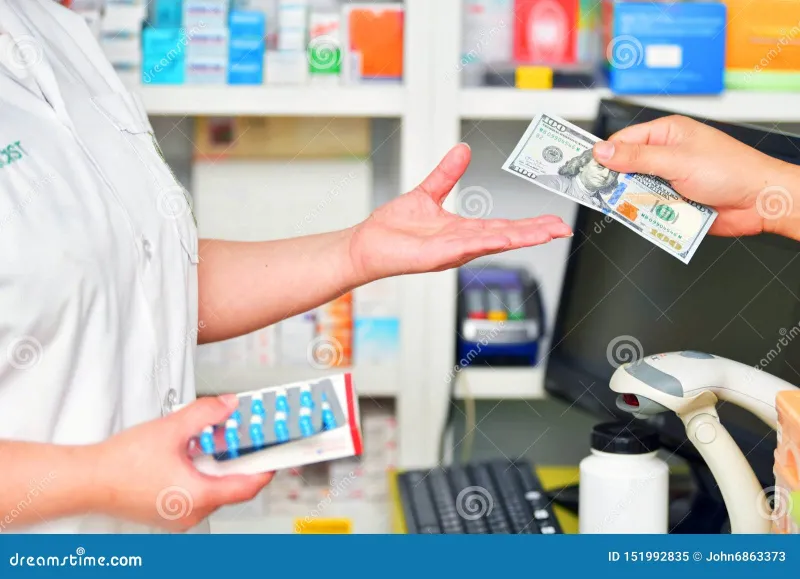
Photo: pharmacy counter paying cash prescription medication, via thumbs.dreamstime.com
Here's a question that sounds absurd until you've seen the receipts: why would anyone with health insurance voluntarily pay cash for their prescriptions?
Turns out, there's a growing crowd of Americans doing exactly that — and saving serious money in the process. Cash-pay pharmacies, which skip the insurance middleman entirely, have quietly become one of the smartest-kept secrets in prescription savings. If you've never heard of them (or assumed they were a gimmick), it's time for a closer look.
The Weird Math of Insurance Pricing
To understand why cash can beat coverage, you need to know how prescription pricing actually works. When you use insurance, three parties get involved: your insurer, a pharmacy benefit manager (PBM), and the pharmacy. Each one takes a cut, negotiates rates, and applies its own markup. The price you pay at the counter — your copay — isn't necessarily tied to what the drug actually costs.
Sometimes that copay is a great deal. And sometimes it's wildly out of line with reality. A generic medication that costs $9 cash might carry a $30 copay because your plan's formulary puts it in an expensive tier. Worse, some pharmacies will run your insurance, see the copay is higher than the cash price, and charge you the copay anyway — unless you ask.
That's the loophole cash-pay pharmacies are built to exploit.
Meet the Cash-Pay Players
A handful of companies have made bypassing insurance their entire business model, and the names worth knowing are surprisingly accessible.
Cost Plus Drugs, launched by Mark Cuban in 2022, publishes its actual cost for hundreds of generic medications, then adds a flat 15% margin plus a small pharmacy fee. There's no membership required. A month's supply of a generic that might run $50 through insurance can land closer to $5–$15 here. The tradeoff: it's shipping-only, so you'll wait a few days, and it doesn't carry brand-name or controlled substances.
Blue Sky Drugs and similar direct-pay pharmacies operate on a simpler premise — transparent cash pricing at the counter or online, no insurance processing, no PBM games. Some also offer membership-style pricing where a flat fee unlocks wholesale-cost generics.
Costco and supermarket pharmacies deserve a mention too. You don't need a membership to use Costco Pharmacy in most states, and their cash prices on generics routinely embarrass big-box competitors.
When Paying Cash Actually Wins
So when should you leave the insurance card at home? A few scenarios where cash-pay almost always comes out ahead:
- Cheap generics. If your drug is on a $4 generic list or costs under $15 cash, running insurance is often pointless. Some plans won't even cover low-cost generics.
- High-deductible plans. If you haven't hit your deductible, you're paying full price anyway — so you might as well pay the real full price, not the inflated retail one.
- Drugs your plan excludes. Formularies change. If your medication got dropped or moved to an expensive tier, cash pricing may undercut your new copay dramatically.
- Brand-name drugs with manufacturer discounts. Sometimes stacking a copay card or patient assistance program outside of insurance beats the insured route entirely.
How to Run the Numbers Yourself
You don't need a spreadsheet habit to figure this out — just ten minutes and three price checks.
Step one: Find the cash price. Check Cost Plus Drugs' searchable price list, or call two or three local pharmacies and ask for their "cash price" (not the insured price). Pharmacies are required to give it to you if you ask.
Step two: Compare it to your copay. Look at your plan's formulary or simply check what you paid last time. Don't forget to factor in whether the purchase counts toward your deductible — if you're close to meeting it, insurance pricing may matter more this year.
Step three: Ask the pharmacist to run both. This is the move most people don't know about: pharmacists can process a prescription as cash or through insurance, whichever is cheaper. Just say, "Can you tell me the cash price before you run my insurance?"
One caveat: cash purchases generally don't count toward your deductible or out-of-pocket maximum. If you're a heavy medication user who blows past your deductible every year anyway, that math can flip. But for anyone on a high-deductible plan, an excluded drug, or a cheap generic, the cash route is frequently the winner — sometimes by 70% or more.
The Bottom Line
Insurance is great for catastrophic costs, but for everyday prescriptions it can be a very expensive convenience. Cash-pay pharmacies have peeled back the curtain on just how inflated insured pricing can be, and the competition they've created benefits everyone — even people who never switch.
Before your next refill, spend ten minutes comparing. Your wallet will thank you, insurance card or not.