The Art of the Stack: Legally Combining Copay Cards and Assistance Programs for Brand-Name Drugs

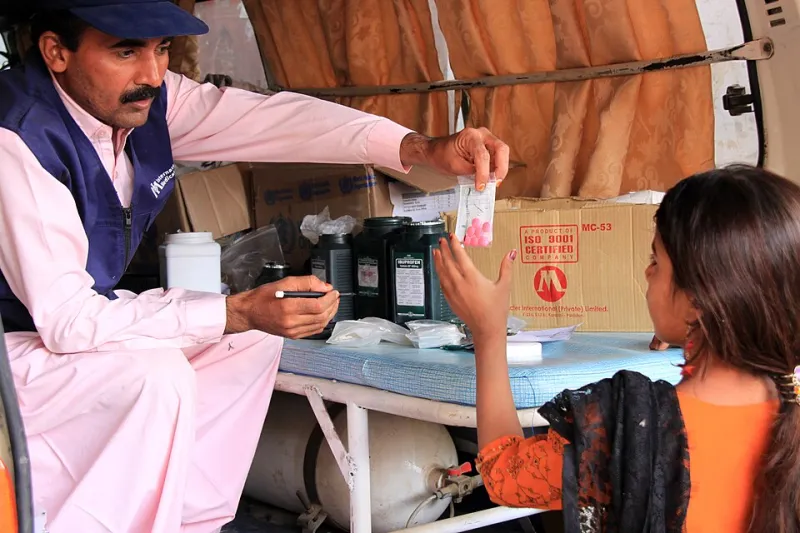
Photo: U.S. Army photo by Chris House, Public domain, via Wikimedia Commons
Brand-name drug prices in the US can feel like a bad joke — $500, $600, sometimes north of $700 a month before insurance does anything. But buried in the fine print of nearly every expensive new medication is a legal escape hatch that most patients never fully use: stacking.
Stacking means layering multiple cost-assistance programs on top of each other — a manufacturer copay card here, a patient assistance foundation there — to push your out-of-pocket cost as close to zero as the rules allow. Done right, it's completely legal. Done wrong, you can waste months or get denied. Here's how to do it right.
Layer 1: The Manufacturer Copay Card
Nearly every major brand-name drug for common conditions has a copay assistance program run by the manufacturer. These cards typically cap your monthly copay — often at $5 to $10 — for commercially insured patients.
Take Eliquis (apixaban), the blockbuster blood thinner from Bristol Myers Squibb and Pfizer. Its copay card has historically reduced eligible patients' costs to as low as $10 per month. Same story with Jardiance (empagliflozin), the Boehringer Ingelheim/Lilly diabetes and heart drug — its copay savings program commonly brings the monthly cost down to $10 for people with commercial insurance.
How to sign up, step by step:
- Go to the drug's official website (eliquis.com, jardiance.com) — always the manufacturer's site, not a third-party lookalike.
- Look for a link that says "Copay Card," "Savings Program," or "Patient Support."
- Fill out the short form — you'll need your insurance details and prescriber info.
- Download the card or save it to your phone wallet.
- Send it to your pharmacy or tell your pharmacist you have a copay card on file. They'll process it with your insurance claim.
That's it. Most cards are good for 12 months and renew annually as long as you re-enroll.
The Big Restriction: Medicare and Government Insurance
Here's the rule that trips up millions of people: if you have Medicare, Medicaid, TRICARE, or any other federal drug coverage, you generally cannot use manufacturer copay cards. Period.
This isn't a pharma choice — it's federal anti-kickback law. Manufacturers can't effectively subsidize government beneficiaries' prescriptions because doing so could be viewed as inducing use of federally funded drugs. Companies have paid billions in settlements over exactly this.
So who's out of luck with copay cards?
- Medicare Part D enrollees
- Medicare Advantage members with drug coverage
- Medicaid recipients
- TRICARE and VA beneficiaries
- Anyone whose insurance is government-funded
If that's you, skip Layer 1 and jump straight to Layers 2 and 3 — they're designed with you in mind.
Layer 2: Manufacturer Free Drug and Bridge Programs
Separate from copay cards, most manufacturers run patient assistance programs (PAPs) that provide medications free or at deep discounts to people who are uninsured, underinsured, or on Medicare with limited income. These are income-based — typically up to 300–500% of the federal poverty level, which is more generous than most people assume.
For Eliquis, the manufacturer's patient assistance program can provide the drug at no cost to qualifying Medicare patients who meet income criteria. Jardiance has a similar program through its manufacturer's patient support arm.
Applications usually require:
- Proof of income (tax return or benefits statement)
- Your prescriber to complete a section
- Proof of denied coverage or Medicare status
Pro tip: ask your doctor's office if they have a financial navigator or social worker. These staff members fill out PAP applications all day, every day, and can cut your paperwork time in half.
Layer 3: Patient Assistance Foundations and Foundations' Grant Funds
Independent nonprofits — the HealthWell Foundation, PAN Foundation, Good Days, and disease-specific organizations like the American Kidney Fund — offer grants that cover copays and premiums for specific conditions.
These foundations work differently than manufacturer programs:
- They're disease-focused, not drug-focused (e.g., atrial fibrillation, diabetes)
- Funds open and close based on donations — check availability before applying
- Grants can often be combined with manufacturer programs, since they're independent nonprofits (always confirm each program's rules — some prohibit stacking)
If you're on Medicare and can't use a copay card for Jardiance, a diabetes-focused foundation grant may cover your Part D copay instead. This is the single most underused resource for fixed-income seniors on expensive brand drugs.
Putting It All Together: A Realistic Example
Say you're 58, commercially insured, and prescribed Eliquis:
- Enroll in the Eliquis copay card → copay drops to ~$10/month
- Check if your deductible applies — copay cards usually can't count toward your deductible (a downside worth knowing), but the monthly savings dwarf that concern
- Ask your cardiologist's office about a foundation grant if you hit your out-of-pocket max early in the year
Total monthly cost: roughly $10 instead of $475. Annual savings: north of $5,000.
Now say you're 70, on Medicare, prescribed Jardiance:
- Skip the copay card — not eligible
- Apply to the manufacturer's patient assistance program with income documentation → potentially free medication
- Simultaneously apply to a diabetes foundation for copay grant funds
- Ask about the new Medicare out-of-pocket cap — starting in 2025, Part D out-of-pocket spending is capped at $2,000/year, which changes the math for everyone on expensive drugs
Watch Out for These Traps
- Lookalike coupon websites. Only enroll through the manufacturer's official domain. Scam sites harvest your insurance and personal info.
- Expired cards. Copay cards expire — set a calendar reminder to re-enroll annually.
- Double-dipping violations. Don't use a copay card AND a discount card like GoodRx on the same fill; the system won't allow it and misuse creates compliance headaches.
- Assume nothing. Program terms change yearly. Re-verify eligibility every January.
The system for affording brand-name drugs in America is a maze — but it's a maze with multiple exits, and nobody's going to walk you through them at the pharmacy counter. Print this out, make some calls, and stop paying sticker price for medications that have legal discounts sitting right there on the table.